How to make an old sash window less draughty before summer
Most people think of draught-proofing as a winter job. Sit-beside-the-window-in-December and feel-the-cold-on-your-knuckles work. Fair enough. But the same gaps that lose heat in winter also fail in the other direction in summer. A sash window with a leaky meeting rail lets hot air pour in for the whole of August, which means your fan works twice as hard and your downstairs bedroom never cools down at night.
Sorting it in May is ideal. Cool enough to work without baking. Dry enough that the timbers are stable. And finished before the first proper heatwave.
First, work out what kind of sash you've got
Two main types around Cirencester and the Cotswolds:
- Box sash windows, which are the classic Georgian and Victorian type. Two vertical sliding sashes balanced by weights hidden in a wooden box at either side. Most of the older cottages and townhouses.
- Spring-balance sashes, which are usually mid-20th-century or later. Same sliding arrangement but with spring mechanisms instead of weights. More common in ex-council stock and 1950s builds.
The draught-proofing is roughly the same. The repair techniques are different. Worth knowing which you have before ordering anything.
The five places air sneaks in
On an average sash I usually find it coming in at:
- The meeting rail, where the top and bottom sashes overlap in the middle. Shrinkage of the timber over decades.
- The outer edges of each sash, against the window frame.
- The top and bottom, between the sash and the frame.
- The sash cord pockets, on box sash windows. Hidden pockets in the frame where the cords go down to the weights. Often not sealed.
- The beads, the thin timber strips that hold the sashes in place. If they've come loose they're as good as a letterbox.
The fixes, in order of sensible effort
Quick wins (an afternoon)
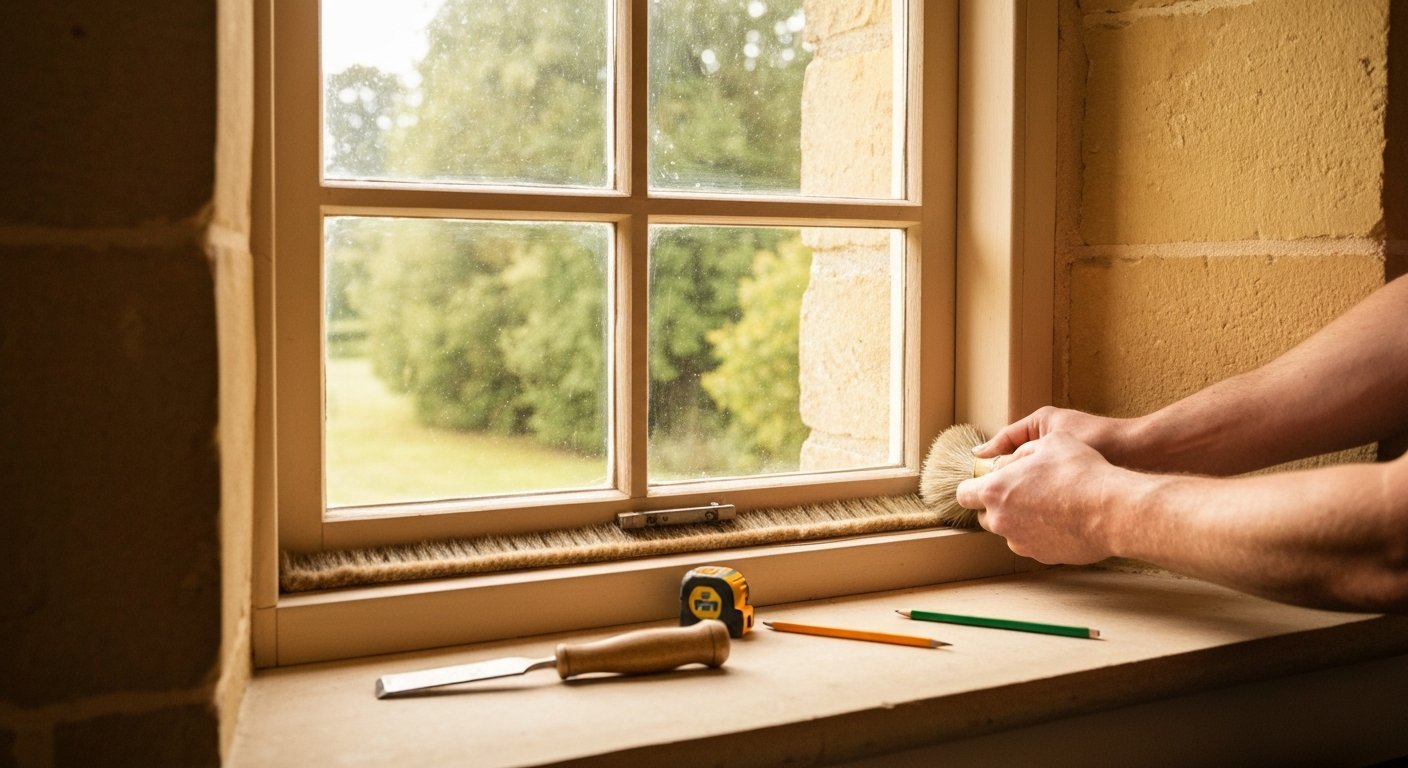
Brush-pile draught strips. Self-adhesive or tacked into a small groove routed into the sash edges and meeting rail. They slide with the sash, so the windows still open properly. I use these on maybe 80 percent of the sash work I do. Proper ones last a decade.
Silicone foam seals along the top and bottom of the frame. Quick, almost invisible, gone in a couple of hours on a standard double sash.
Proper fixes (a day)
Re-seat the staff and parting beads. If they've worked loose, gently remove, clean the paint from the rebates, and fit new beads with a slight undercut so they sit tight against the sash. Old ones come away easily if you're patient. Less so if you're not.
New sash cords. If the cords have gone or are about to, replace the pair. Cotton sash cord, not nylon. Nylon slides off the pulleys. Ask me how I know.
Full overhaul (two or three days)
Remove the sashes entirely, strip paint build-up, replace any rotten timber on the stiles or meeting rail, fit new brush-pile strips into routed grooves, replace cords or springs, and rehang. Done properly, a box sash will then work better than it did in 1890.
I'll be straight with you. If the sashes are painted shut and haven't moved in 20 years, the DIY-Saturday version is not going to cut it. That's a proper overhaul job and it's not one to rush.
What about secondary glazing?
Useful but with reservations. Magnetic secondary glazing (a thin acrylic panel held on with magnetic strips) is excellent for winter draught and noise reduction, and removable in summer if you want to open the window properly. It's a good compromise on listed buildings where full double glazing isn't allowed.
Full double glazing inside the original frame is more of an effort, and for Grade II listed properties in the Cirencester conservation area, it usually needs consent.
A quiet benefit people don't expect
Draught-proofed sashes are significantly quieter. The gaps that let air in also let sound in. One client of mine, up on a street near the old market, swore the traffic had gone down after I'd finished a single-day job on her front two sashes. It hadn't. The windows had just stopped letting the sound of it in.
Sashes need attention?
Brush-pile draught strips, new cords, re-seating the beads. A half-day's work usually makes a noticeable difference. I bring the ladder.
Doors, locks and windows